GPTZero vs Turnitin: Which AI Detector Fits Your Needs?
GPTZero and Turnitin both help evaluate whether writing may have been created or altered with AI, but they are built for different buying situations.
In this guide
GPTZero vs Turnitin: Which AI Detector Fits Your Needs?
GPTZero and Turnitin both help evaluate whether writing may have been created or altered with AI, but they are built for different buying situations. GPTZero fits individuals, educators, publishers, recruiters, and teams that want direct access to AI writing detection, while Turnitin fits schools and institutions that already manage student submissions through Turnitin’s academic integrity ecosystem. The best choice depends less on which name is more familiar and more on your workflow, access needs, review process, and how carefully you handle detector results.
Which tool should you choose first?
Choose GPTZero if you need a standalone AI detector you can access directly, use for pasted text or uploaded files, apply to larger or batch checks through a dashboard, or integrate through an API. Choose Turnitin if your institution already uses Turnitin for assignment submission, similarity reports, grading workflows, and academic integrity review. In a practical gptzero vs turnitin decision, GPTZero is usually easier to adopt outside a formal campus system, while Turnitin is usually stronger when the detector must sit inside a controlled education workflow.
Decision factor | GPTZero | Turnitin |
|---|---|---|
Best fit | Individuals, educators, teams, writers, publishers, hiring teams, and organizations needing direct AI writing detection access | Schools, universities, and institutions already using Turnitin or iThenticate workflows |
Access model | Public-facing tool, dashboard, Chrome extension, team plans, and API options | Institutional account access; AI Writing Detection may require a license add-on through an account manager |
Main workflow | Paste text, upload files, scan webpages, run larger or batch checks, or integrate detection into another platform | Review submitted student work inside Turnitin’s report environment |
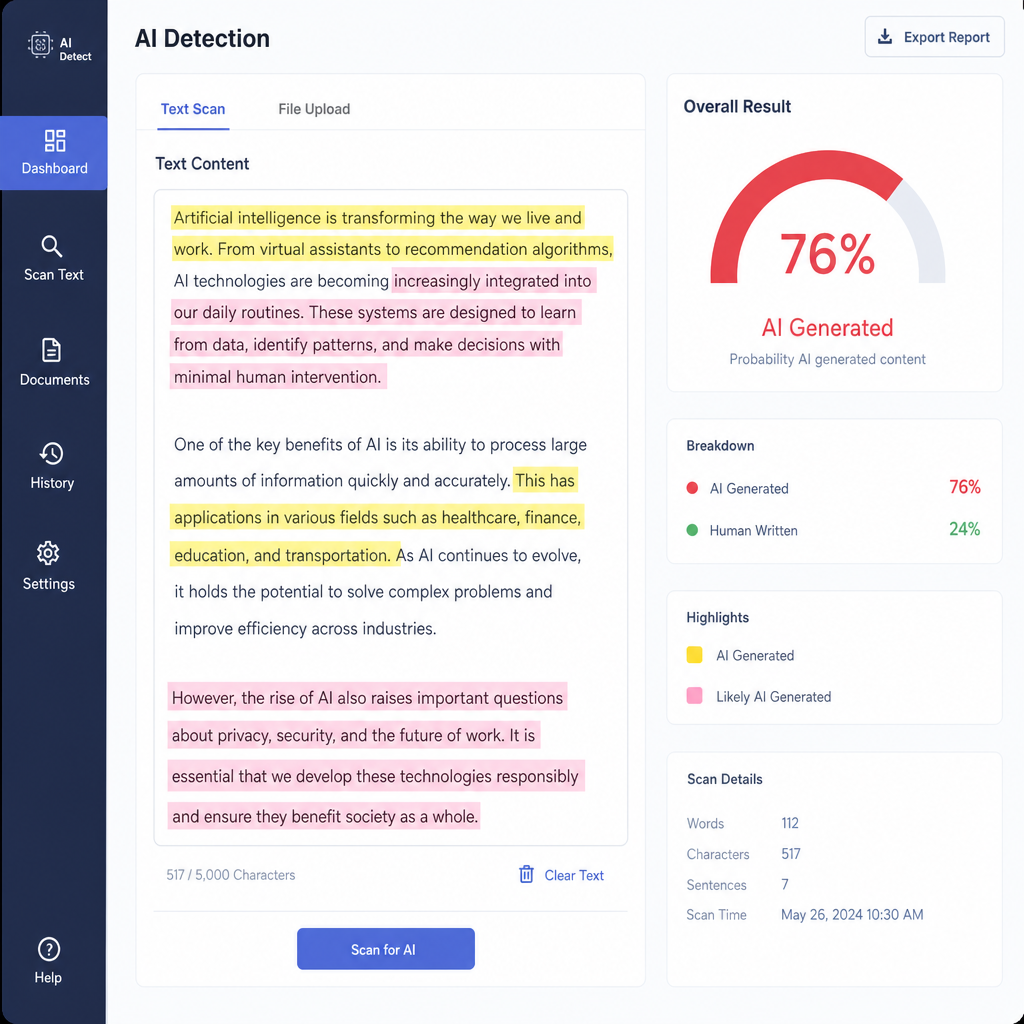
AI result style | Overall document detection plus sentence-level highlighting and explanatory result descriptions | AI writing percentage, submission breakdown, and highlighted qualifying text in the AI Writing Report |
Plagiarism support | GPTZero lists a plagiarism check among its products and has released source-surfacing features | Turnitin is widely used for similarity and originality workflows in academic settings |
Best caution | Do not treat any score as final proof without reviewing context, drafts, and process | Turnitin explicitly says its AI model may misidentify text and should not be the sole basis for adverse action |
This turnitin vs gptzero comparison is not about declaring one detector universally “right.” AI writing detection is probabilistic, and both tools require human review. The stronger question is: which tool gives your reviewers the right context, access, and process for the decision they need to make?
The core difference is workflow, not just detection
GPTZero is designed as a direct AI writing detection product. Its support materials describe a workflow where users paste text or upload a file and receive an overall detection result with sentence-by-sentence highlighting; GPTZero also points users to a dashboard for larger texts or batch files and offers a Chrome extension for scanning webpages. (support.gptzero.me) That makes it useful when the person checking the text is not necessarily inside a university submission system.
Turnitin is different because AI writing detection is part of a broader academic integrity environment. Turnitin’s AI Writing Report is built for instructors reviewing submitted work and explains that its AI percentage is independent from the similarity score. (guides.turnitin.com) This matters because many schools already have policies, administrators, course settings, and student submission records inside Turnitin.
In other words, GPTZero feels more like a flexible detector you can bring to several content workflows. Turnitin feels more like an institutional review layer attached to formal academic submissions. If you are comparing plagiarism detection tools, that distinction matters as much as any feature list.
GPTZero strengths for flexible AI writing detection
GPTZero’s main advantage is accessibility. It can be used by people who do not control a school-wide Turnitin account, which makes it attractive for instructors experimenting with AI policy, editors checking contributed drafts, teams screening public-facing content, or students reviewing their own writing process before submission. GPTZero describes itself as detecting AI at sentence, paragraph, and document level, with a model trained on a diverse corpus of human-written and AI-generated text and a focus on English prose. (support.gptzero.me)
GPTZero also emphasizes interpretability. Instead of only returning a number, its user guidance says the tool gives a description of the result along with sentence-level highlighting. (support.gptzero.me) For reviewers, that can make conversations more concrete: rather than reacting to a single percentage, they can inspect which passages look unusual and ask whether the writing process explains them.
Another strength is deployment flexibility. GPTZero supports dashboard use, a Chrome extension, and API-based integrations. Its LMS guidance says schools can integrate GPTZero through the API, and Canvas users can contact GPTZero about an integration. (support.gptzero.me) For organizations building custom editorial, compliance, or education workflows, that API route can be more relevant than a closed academic submission system.
GPTZero is not only for academic assignments. Its own support page says it works with organizations in education, hiring, publishing, legal, and more. (support.gptzero.me) That broader positioning makes it a realistic option when your content problem is not “Did this student violate a course policy?” but “How should our team review authorship and AI assistance across many kinds of documents?”
Turnitin strengths for institutional academic review
Turnitin’s biggest strength is not that it is a standalone detector. It is that many institutions already rely on Turnitin for assignment submission, similarity checking, instructor review, and academic integrity procedures. For schools, that existing workflow can reduce friction: instructors review student work where submissions already live, rather than copying text into a separate tool.
Turnitin’s AI Writing Report provides an overall percentage for qualifying text that the model determines could be AI-generated or AI-generated and then modified by a paraphraser, bypasser, or word spinner. (guides.turnitin.com) The report also offers a submission breakdown and interactive highlighting, which can help instructors examine specific areas instead of treating the result as a blanket judgment.
A thoughtful turnitin review should also note Turnitin’s guardrails. Turnitin’s guide states that the AI writing model may not always be accurate and should not be used as the sole basis for adverse action against a student. (guides.turnitin.com) That warning is important because Turnitin results often appear in higher-stakes academic settings, where consequences can include grade disputes, integrity meetings, or disciplinary review.
Turnitin also has clear file requirements for AI reports. A submission must be under 100 MB, contain at least 300 words of prose in long-form writing format, not exceed 30,000 words, use a supported language, and be submitted as an accepted file type such as .docx, .pdf, .txt, or .rtf. (guides.turnitin.com) These boundaries are useful for consistent institutional review, but they can be limiting if your team needs to assess unconventional content, short snippets, scripts, code, tables, or mixed-format materials.
Which option is easier to access and manage?
GPTZero is usually easier to access for individuals and small teams because it offers direct product routes such as its dashboard, browser extension, team plans, and API. Turnitin is easier to manage at scale when the organization already uses Turnitin for submissions and wants AI detection governed through institutional accounts. If your decision is about immediate access, GPTZero has the edge; if it is about centralized academic administration, Turnitin has the edge.
Access and management need | Better fit | Why it matters |
|---|---|---|
A teacher, editor, or student wants to check text without waiting for institutional procurement | GPTZero | Direct access is more practical when the reviewer is acting independently |
A university wants AI review tied to official student submissions | Turnitin | The report can sit inside existing academic integrity workflows |
A product team wants to add detection into its own platform | GPTZero | GPTZero provides API documentation and subscription steps for developers |
A department wants account-level purchasing and policy control | Turnitin | Turnitin access typically runs through institutional administrators and account managers |
A small content team wants shared usage | GPTZero | GPTZero lists enterprise and team plans with shared team credits and unified billing |
Turnitin’s AI Writing Detection access may require a license add-on. Turnitin’s help center says administrators should contact their Turnitin or iThenticate account manager for pricing and license updates, while instructors should go through their institution’s administrator. (helpcenter.turnitin.com) That is normal for enterprise education software, but it can be frustrating for someone who simply wants to test a document today.
GPTZero’s pricing page lists enterprise and team plans, shared team credits, unified billing, and API options. (gptzero.me) Because pricing and plan limits can change, buyers should confirm current costs directly before making a procurement decision. The practical takeaway is simple: GPTZero is more buyer-friendly for direct adoption, while Turnitin is more process-friendly for institutions that already depend on it.
Detection depth and result interpretation
Both tools give reviewers more than a yes-or-no answer, but they frame results differently. GPTZero emphasizes interpretive support for the user, including document-level results and sentence-level highlighting. Turnitin emphasizes report-based review inside an instructor workflow, including a percentage, submission breakdown, and qualifying-text highlights.
Review criterion | GPTZero | Turnitin |
|---|---|---|
Overall AI signal | Document-level detection result | Percentage of qualifying text detected as AI |
Granular review | Sentence-level highlighting | Highlighted qualifying text and submission breakdown |
Explanation style | Result descriptions intended to help users interpret output | AI Writing Report guidance and indicator states |
Low-score caution | Users still need to treat results as probabilistic | Scores above 0% and below 20% are not surfaced as a percentage to reduce misinterpretation |
Human judgment | Needed for any consequential decision | Explicitly required by Turnitin’s own guidance |
Turnitin’s handling of low AI percentages is especially important. Its guide says scores above 0% and below the 20% threshold are not surfaced as a percentage, with an asterisk shown instead, because of a higher incidence of false positives in that range. (guides.turnitin.com) That design choice shows why AI detector results should be interpreted conservatively.
GPTZero has also moved beyond older detector concepts. Its support page says that, as of autumn 2023, GPTZero no longer uses perplexity and burstiness for AI detection because it migrated to a deep-learning-based architecture. (support.gptzero.me) This is relevant because many outdated discussions of AI writing detection still focus on predictable word choice or sentence variation as if those are the whole model.
Which is better for plagiarism detection tools and originality checks?
Turnitin is the more established choice for formal academic similarity workflows, while GPTZero is better described as an AI detection-first platform that also offers plagiarism-related features. If your primary need is traditional plagiarism review across student submissions, Turnitin may fit better. If your primary need is ai writing detection with additional originality checks, GPTZero may be the more flexible option.
The difference matters because plagiarism detection and AI detection answer related but separate questions. Plagiarism tools ask whether text overlaps with existing sources. AI detectors ask whether patterns in the writing resemble text produced or altered by AI systems. A document can be original but AI-generated, plagiarized but human-written, both, or neither.
GPTZero’s product materials list a plagiarism check among its products, and a GPTZero product update described plagiarism scans and source-surfacing features becoming available to users. (gptzero.me) Turnitin, by contrast, has long been associated with similarity reporting and originality review in education, and its AI percentage is explicitly separate from the similarity score. (guides.turnitin.com)
For buyers comparing turnitin alternatives, this is the key question: do you need to replace a full academic integrity suite, or do you need a practical AI detector that can sit beside your current process? GPTZero may be a strong alternative for AI authorship review, but a school replacing Turnitin’s broader similarity, grading, and submission workflow should evaluate more than the AI detector alone.
Language, file, and content limits shape real-world use
Tool choice often comes down to the documents you actually review. Turnitin’s AI Writing Report requires long-form prose and does not reliably detect AI-generated text in non-prose formats such as poetry, scripts, code, bullet points, tables, or annotated bibliographies. (guides.turnitin.com) That is not a small limitation if your assignments include lab reports, code notebooks, presentation outlines, creative work, or structured bibliographies.
Turnitin currently lists supported languages for AI Writing Reports as English, Spanish, Japanese, and Arabic, while also noting that only the English AI detector includes AI paraphrasing and bypasser detection capabilities. (guides.turnitin.com) This makes Turnitin clearer for specific academic use cases but less flexible for organizations reviewing many languages or formats.
GPTZero says its model has a focus on English prose, so reviewers should still be cautious with multilingual or highly specialized writing. (support.gptzero.me) GPTZero’s advantage is not unlimited language coverage; it is that the tool can be used across more non-institutional workflows, including dashboard checks, browser scans, and API integrations. For content teams, that flexibility may matter more than formal assignment-report constraints.
GPTZero vs Originality.ai vs Copyleaks vs Turnitin AI detection
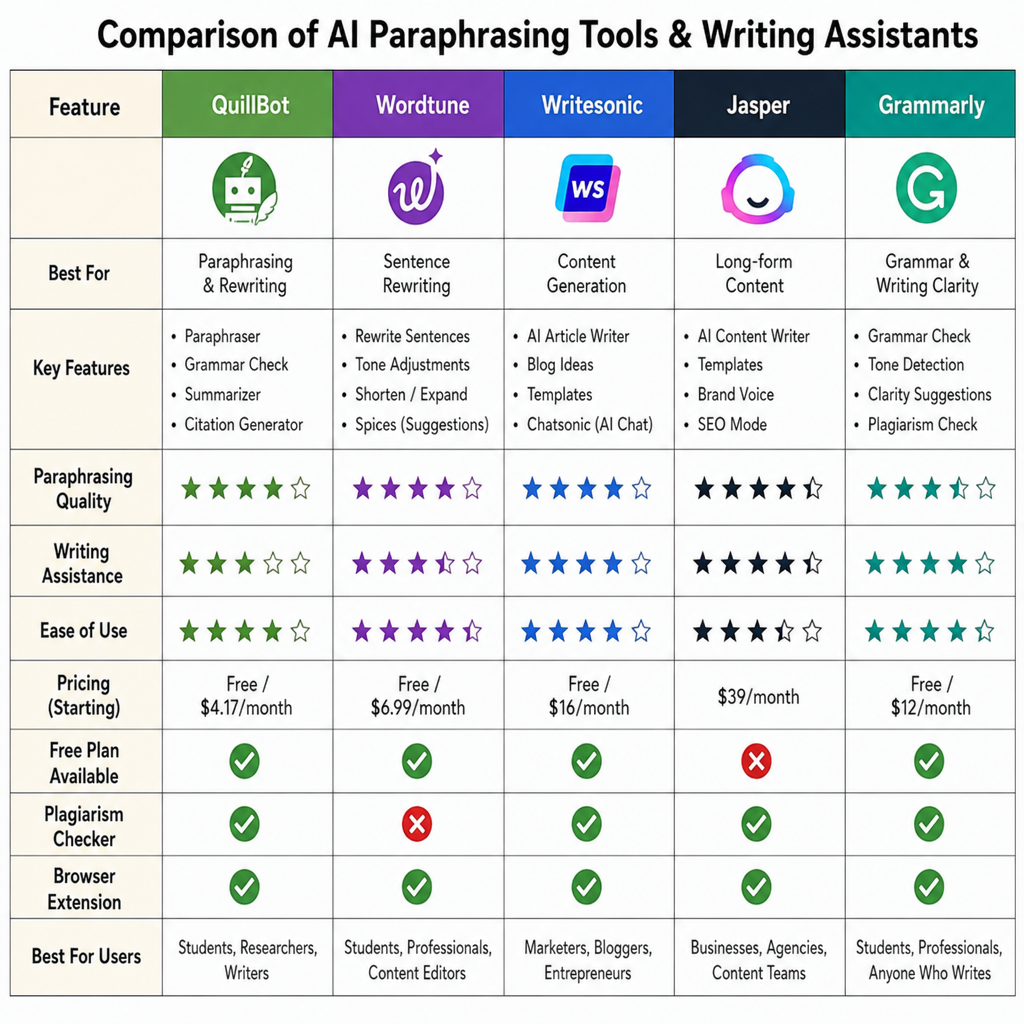
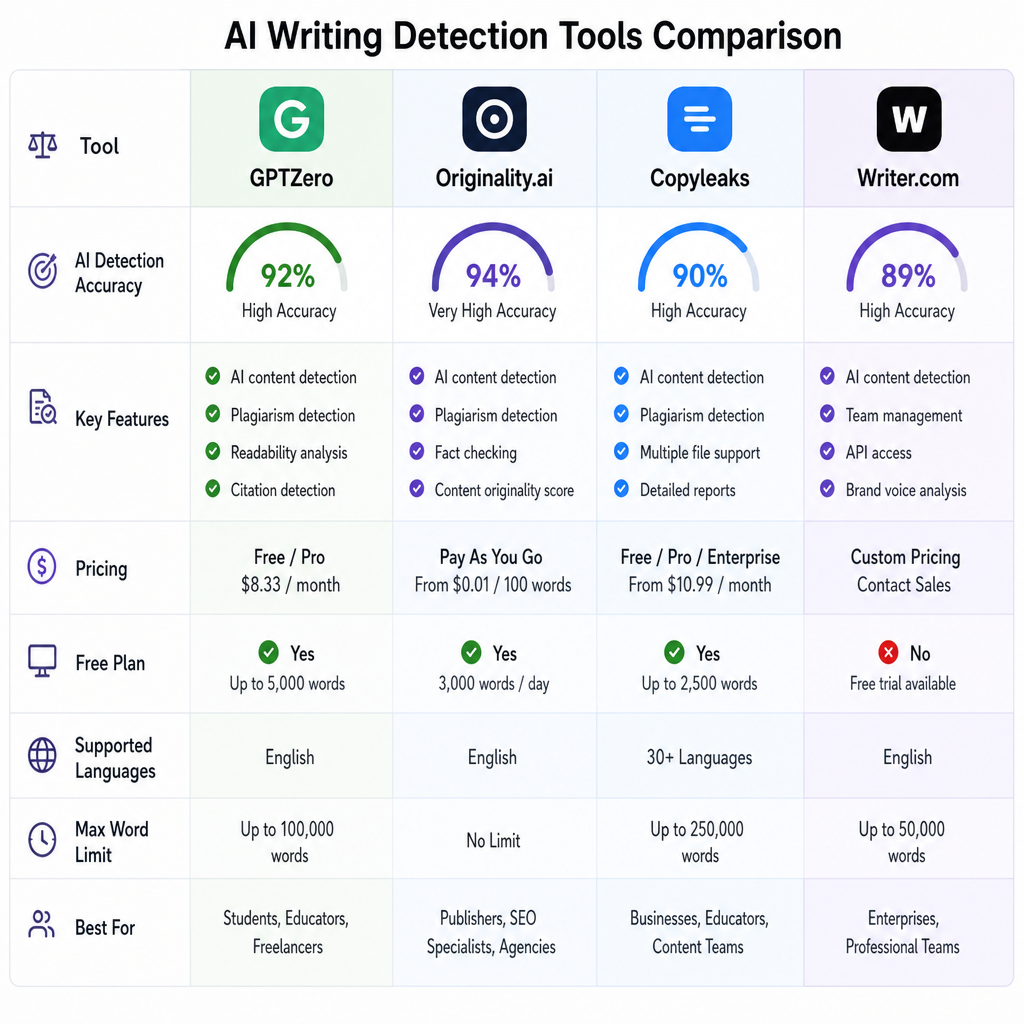
The search phrase gptzero vs originality ai vs copyleaks vs turnitin ai detection reflects a real buying problem: people rarely compare only two tools. They want to know which detector belongs in education, publishing, SEO, compliance, or product workflows. GPTZero and Turnitin are often compared because of education, but Originality.ai and Copyleaks frequently enter the conversation for web content, APIs, and broader originality checks.
Tool | Best-fit use case | What to verify before choosing |
|---|---|---|
GPTZero | Flexible AI writing detection for individuals, educators, teams, and organizations outside or alongside institutional systems | Plan limits, privacy settings, API needs, and how reviewers will interpret highlights |
Turnitin | Institution-led academic integrity review tied to student submissions | License access, policy alignment, file requirements, and instructor training |
Originality.ai | Content operations, publishing, and API-based originality workflows | Current model options, language needs, plagiarism settings, and editorial review process |
Copyleaks | Developer-friendly AI and plagiarism workflows, multilingual checks, and enterprise integrations | Detection levels, language support, API setup, and how “AI Logic” explanations fit the review process |
Copyleaks’ API documentation says its AI Text Detection API classifies text as human or AI, returns section-level classifications plus an overall summary, supports 30+ languages, and offers AI Logic explanations. (docs.copyleaks.com) That makes Copyleaks especially relevant when the detector needs to be embedded inside another system.
Originality.ai is often discussed in publishing and SEO contexts, but buyers should still evaluate it against their actual workflow rather than reputation alone. If the work is student-facing, policy-heavy, and institution-managed, Turnitin may be more appropriate. If the work is editorial, commercial, or platform-based, GPTZero, Copyleaks, or Originality.ai may be easier to operationalize.
Accuracy claims need cautious interpretation
AI detector accuracy is hard to compare fairly because results depend on document length, genre, language, prompt style, editing level, paraphrasing, and the model that produced the text. Vendor claims, independent tests, and user anecdotes often use different samples and definitions. A detector that performs well on long English essays may behave differently on short comments, code explanations, translated work, or heavily edited AI drafts.
The safest policy is to treat any detector as an evidence-gathering tool, not an automatic verdict. Turnitin says its model may misidentify human-written, AI-generated, and AI-paraphrased text and should not be used as the sole basis for adverse action. (guides.turnitin.com) GPTZero’s paraphrasing support page also says its detection system is not infallible and encourages users to use authorship tools for transparent verification. (support.gptzero.me)
A strong review process should combine:
- The detector report: Review highlighted passages, not just the headline score.
- Writing history: Look at drafts, outlines, version history, notes, and revision patterns.
- Assignment context: Consider whether the task allowed AI brainstorming, editing, translation, or grammar support.
- Student or author conversation: Ask process-based questions before making accusations.
- Policy clarity: Define what counts as permitted AI assistance before work is submitted.
- Consistent handling: Apply the same review process across similar submissions to reduce bias.
This is especially important for high-stakes academic decisions. A detector can start a review, but it should not replace careful judgment.
Final recommendation
Choose GPTZero if you want direct, flexible AI writing detection that can work for educators, students, editors, publishers, hiring teams, and organizations without relying on a full institutional Turnitin setup. It is also the stronger fit when you need browser-based checks, dashboard scanning, batch workflows, or API integration.
Choose Turnitin if your priority is institution-managed academic integrity, especially when assignments, similarity reports, instructor review, and student submissions already live inside Turnitin. It is less convenient as a standalone option, but it can be the better fit for schools that need centralized control and policy alignment.
For most readers comparing gptzero vs turnitin, the decision is not “which detector is perfect?” No detector is. The decision is which tool fits your access model, document types, review responsibilities, and tolerance for risk. If the result could affect a grade, job, publication, or disciplinary outcome, use the detector as one signal among several—and build a transparent review process around it.