Exploring CarterPCS: The Future of AI Humanization
AI humanization is the shift from using artificial intelligence as a cold command-and-output machine to using it as a more natural, expressive, and
In this guide
Exploring CarterPCS: The Future of AI Humanization
AI humanization is the shift from using artificial intelligence as a cold command-and-output machine to using it as a more natural, expressive, and context-aware digital partner. CarterPCS has become part of that conversation through creator-led AI experiences and interest around the term carterpcs ai humanizer, which many people use when searching for more natural AI writing and interaction. This article explores what that future could look like, why AI personality matters, and how to use humanized technology responsibly instead of treating it as a shortcut for deception.
What does AI humanization mean for everyday users?
AI humanization means designing AI so it communicates in ways that feel clear, helpful, emotionally aware, and personal without pretending to be a real human. For everyday users, it shows up in smoother writing, more natural chatbot replies, better memory of preferences, and tools that adapt to context instead of forcing people to repeat themselves over and over.
That matters because most people do not want to “operate” software; they want to get something done. A student wants to clarify an idea. A business owner wants a draft that sounds like their brand. A creator wants help shaping a message without flattening their voice. A customer wants a fast answer that does not feel like it came from a script.
This is where ai humanization becomes more than a cosmetic layer. It is not only about making sentences sound casual. It is about reducing friction between human intent and machine output. When AI understands tone, purpose, audience, and boundaries, the experience feels less mechanical and more useful.
At the same time, “humanized” does not mean “undetectable,” “dishonest,” or “unaccountable.” The healthiest version of this trend improves clarity, accessibility, and communication while keeping the user responsible for accuracy, originality, and disclosure where it is required.
CarterPCS and the creator-led shift in AI experiences
CarterPCS is part of a broader movement where AI tools are not introduced only through enterprise software pages or technical documentation. They are increasingly discovered through creators, short-form videos, communities, and personality-driven platforms. The official CarterPCS AI page presents a “Talk to CarterPCs” experience where users can text an AI replica of CarterPCs, with free access and no sign-up required according to the page. (carterpcs.ai)
That detail is important because it points to a major change in how people meet AI. Instead of opening a blank chatbot and wondering what to ask, users begin with a familiar persona. The draw is not just automation; it is connection, tone, and recognition. A creator’s style becomes the interface.
Search interest around carterpcs ai humanizer also reflects how people are thinking about AI today. They are not only asking, “Can AI generate text?” They are asking, “Can it sound natural?” “Can it match a voice?” “Can it help me communicate without sounding robotic?” Those questions sit at the center of the next stage of personalized AI.
However, creator-led AI also needs thoughtful framing. When a personality becomes a product experience, users may expect warmth, humor, or familiarity. The technology still needs clear boundaries: what it can do, what it cannot verify, how user data is handled, and when a real human should take over.
AI personality is becoming a product feature
For years, software personality was mostly a branding choice. A button might sound playful. An error message might be friendly. Today, AI personality can shape the entire user experience because the product speaks, writes, recommends, summarizes, and responds in real time.
A useful AI personality does not simply add jokes or casual phrasing. It gives the interaction a consistent communication style. It can be concise or detailed, energetic or calm, formal or conversational. That consistency helps users build trust because they know what kind of response to expect.
The best AI personality also serves the task. A tax assistant should not behave like a stand-up comedian. A wellness chatbot should not sound rushed or dismissive. A writing assistant should not overwrite every sentence in the same polished corporate tone. Personality works when it supports the user’s goal, not when it distracts from it.
In the context of a carterpcs ai humanizer, personality becomes especially relevant. People searching that phrase may be looking for writing that feels less generic and more alive. The deeper opportunity is to help users express their own ideas more clearly, not to replace their judgment or mask the source of work.
The building blocks of humanized technology
Humanized technology is not created by one feature. It emerges from several design choices working together: language quality, context awareness, personalization, transparency, and control. When those pieces are missing, even a powerful AI model can feel awkward, repetitive, or strangely impersonal.
Natural language rhythm
Human writing usually has variation. It mixes short sentences with longer ones. It includes emphasis, transitions, examples, and occasional imperfection. AI-generated writing often feels unnatural when every paragraph has the same length, every sentence follows the same rhythm, and every point sounds equally important.
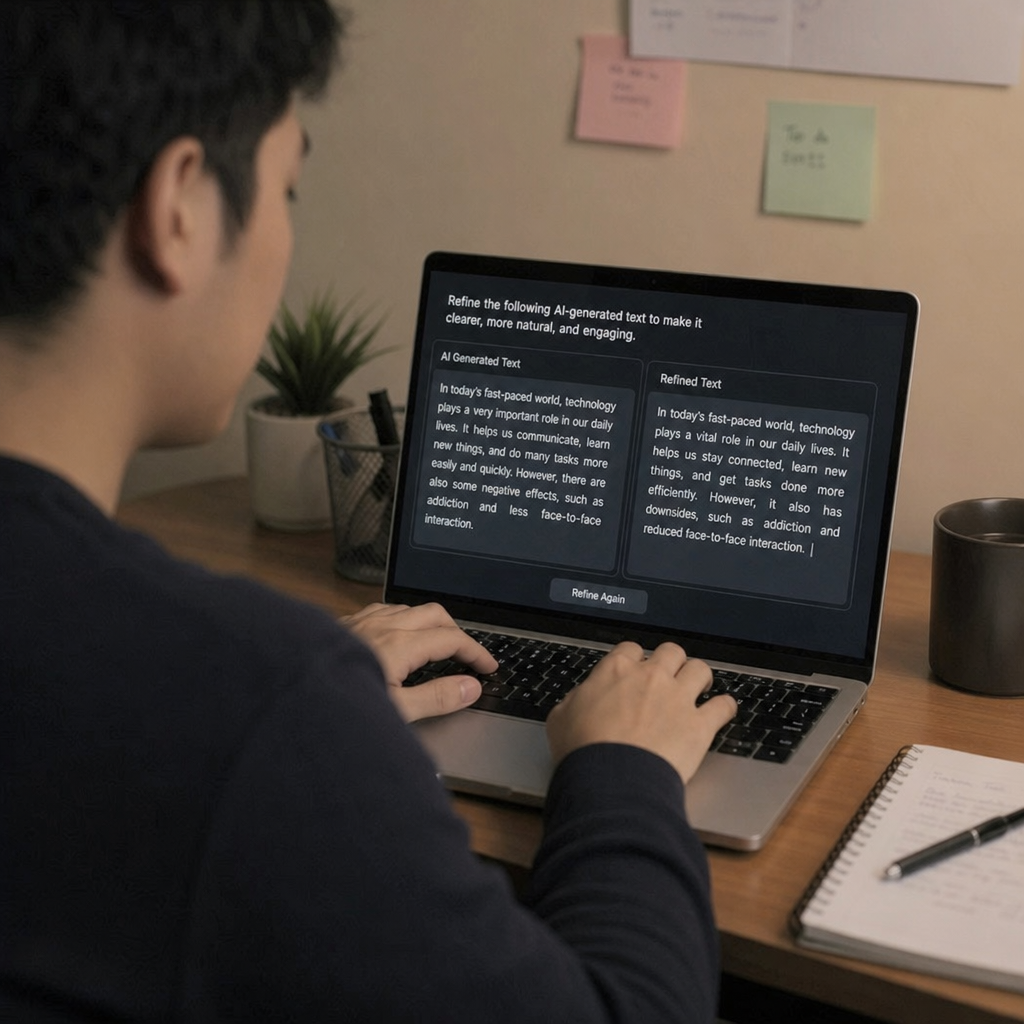
A humanizer can improve readability by adjusting pacing, reducing filler, and replacing stiff phrasing with clearer language. That does not mean adding slang at random. It means choosing words that fit the audience and purpose.
For example, a product update for customers might need warmth and clarity. A research summary might need precision. A social post might need energy. Humanization works best when it respects the context rather than applying one “human” style to everything.
Memory and context
The most natural ai interaction is often the one where the user does not have to start from zero. If an AI assistant remembers preferred tone, typical audience, formatting needs, or recurring goals, it can provide more relevant support.
This is where personalized AI becomes powerful. A marketer might want every draft aligned with a brand voice. A teacher might want explanations adjusted for different reading levels. A founder might want concise investor-style summaries. The technology feels more human because it reflects the user’s world.
Still, memory should be handled carefully. Users need control over what is remembered, what is forgotten, and what should never be stored. Personalization without consent can quickly become uncomfortable.
Emotional awareness without emotional manipulation
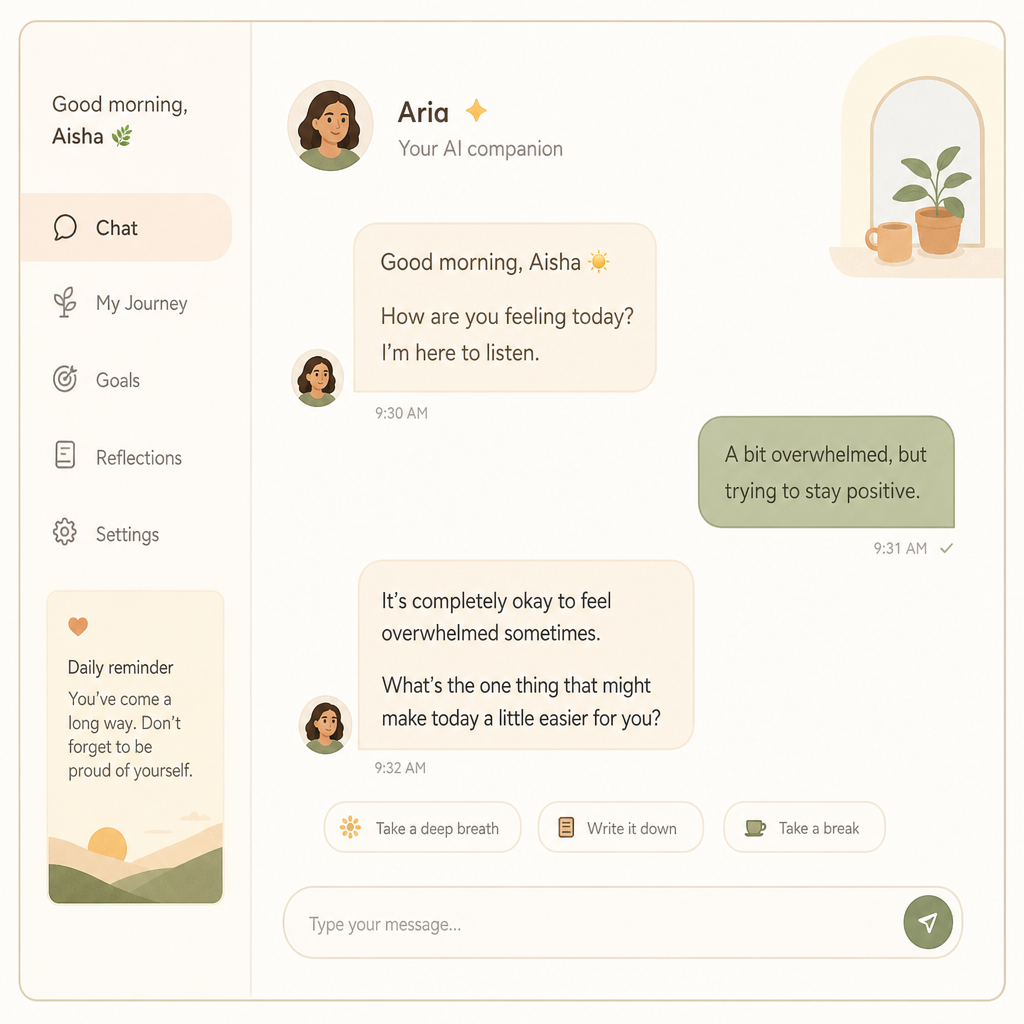
Humanized AI often uses emotional cues. It may recognize frustration, offer encouragement, or respond more gently to sensitive topics. Done well, this makes tools more accessible and less intimidating.
But emotional awareness must not become manipulation. An AI should not pressure people into decisions, exaggerate intimacy, or exploit trust. A friendly tone is helpful; false closeness is not.
That distinction will become more important as AI personalities become more realistic. The future of AI humanization should make technology easier to use while remaining honest about what the system is.
Transparency and user control
Humanized AI should still be visibly AI. Users should know when they are interacting with software, what the tool is meant to do, and where its limits are. Clear labels and settings are not obstacles to a good experience; they are part of it.
User control also means adjustable tone. Some people want a polished rewrite. Others want a light edit that preserves their phrasing. Some want direct feedback, while others prefer coaching questions. The more control users have, the less likely the AI is to erase their voice.
How should people use a carterpcs ai humanizer responsibly?
People should use a carterpcs ai humanizer or any similar AI humanization tool as an editing aid, not as a way to misrepresent work, bypass rules, or avoid thinking. The responsible goal is to make communication clearer, more natural, and more aligned with the writer’s intent while keeping the human user accountable for the final result.
That practical line matters. AI can help remove awkward phrasing, simplify dense paragraphs, adjust tone, and brainstorm alternatives. It can also introduce errors, change meaning, or make writing sound less like the original author if used carelessly.
A good rule is simple: if you would feel uncomfortable explaining how you used the tool, reconsider the use case. In school, work, publishing, and client communication, expectations vary. Some contexts welcome AI assistance. Others require disclosure or prohibit certain uses. The tool cannot make that decision for you.
A responsible workflow looks like this:
- Start with your own intent. Know what you want to say before asking AI to polish it. A humanizer works better when it has a real idea to preserve.
- Use AI for clarity, not disguise. Ask for smoother flow, stronger transitions, or a more conversational tone instead of asking it to hide AI involvement.
- Review meaning line by line. Humanizers can alter nuance. Check that the final version still says what you meant.
- Add specific details only you know. Personal experience, original reasoning, examples, and judgment are what make writing genuinely human.
- Follow the rules of the context. If your school, employer, platform, or client has AI guidelines, treat those as the standard.
- Keep a record when needed. For important work, save notes, drafts, sources, or outlines so you can show your process.
This approach turns ai humanization into a communication practice rather than a loophole. The output may sound better, but the integrity still comes from the person using it.
Intelligent automation is moving from speed to sensitivity
The first promise of automation was speed. Do the repetitive task faster. Send the email faster. Generate the report faster. That remains useful, but intelligent automation is now moving toward sensitivity: understanding context, adapting tone, prioritizing information, and knowing when not to automate everything.
A customer support bot, for example, should not simply answer quickly. It should detect when the issue is complex, when the customer is upset, and when escalation is needed. A writing assistant should not only produce paragraphs. It should understand whether the user wants persuasion, explanation, reassurance, or precision.
This is the bridge between automation and humanization. Automation handles the heavy lifting. Humanization makes the result usable, acceptable, and appropriate. Without that second layer, speed can create more work because users have to repair the tone, correct assumptions, or translate robotic output back into human language.
For businesses, this shift changes what “good AI” means. It is not enough for a tool to produce text or complete a workflow. It should also fit the brand, respect the audience, and reduce cognitive load. In other words, the future belongs to AI that can execute and communicate.
Practical ways to make AI output sound more human
Many people assume humanization happens after the draft is written. In reality, the best results often come from better direction before generation and better judgment after generation. Whether you are using a dedicated humanizer or a general AI assistant, the workflow matters.
Here is a practical checklist:
- Define the audience. A message for first-time customers should not sound the same as an internal update for a technical team.
- Name the desired tone. Use clear words such as warm, concise, expert, friendly, direct, or reassuring.
- Provide examples of your voice. If you want personalized output, show the AI a paragraph that sounds like you.
- Ask for restrained edits. Phrases like “preserve my meaning and voice” can reduce over-polishing.
- Remove empty intensifiers. Words such as “game-changing,” “revolutionary,” and “seamless” can sound generic if they are not supported by detail.
- Vary sentence structure. Mix explanation, examples, and short emphasis lines where appropriate.
- Add concrete context. Real details make writing feel human because they show lived understanding.
- Read it aloud. If a sentence feels unnatural in speech, it probably needs revision.
- Check claims. Human-sounding misinformation is still misinformation.
- Make the final edit yourself. Your choices are what give the piece its real voice.
This checklist applies far beyond the carterpcs ai humanizer keyword. It is useful for blog posts, emails, product descriptions, social captions, scripts, internal documentation, and support replies. The point is not to make AI invisible. The point is to make the communication effective.
Personalized AI will reshape everyday work
The strongest version of personalized AI will not feel like a generic chatbot with a name attached. It will feel like a flexible layer across daily work: drafting, planning, summarizing, researching, organizing, and explaining in a way that matches each user’s needs.
Imagine an AI assistant that knows you prefer bullet-point summaries before long explanations. It remembers that your customers are nontechnical, so it avoids jargon. It knows your brand should sound helpful but not overly casual. It can transform a rough idea into a draft, then explain what it changed and why.
That kind of experience changes the relationship between people and tools. Instead of learning a new interface for every task, users can communicate intent in natural language. Instead of accepting a one-size-fits-all output, they can shape the assistant over time.
The same principle applies to creators and public figures. A creator-based AI experience can let fans interact with a recognizable style, ask common questions, or explore content in a more conversational way. The official CarterPCS AI page’s focus on texting an AI replica is an example of how personality and access can become part of the product experience. (carterpcs.ai)
The challenge is keeping that experience grounded. Personalized AI should be useful because it understands preferences, not because it blurs reality. The more human the interface becomes, the more important clear disclosure becomes.
What could AI interaction look like next?
AI interaction could become more conversational, multimodal, adaptive, and embedded in the tools people already use. Instead of opening a separate app, users may increasingly encounter AI inside messaging, documents, search, customer support, creative software, education platforms, and business systems.
The interface may also become less dependent on typing. Voice, images, screen context, and real-time collaboration can make AI feel more present. A user might speak a rough idea, show a screenshot, and ask the assistant to draft a response in the right tone. Another user might ask an AI to compare two versions of a document and explain which one sounds more trustworthy.
Humanization will be especially important in these moments because AI will sit closer to real decisions. When technology helps write messages, respond to customers, coach students, or summarize sensitive information, tone is not decoration. Tone affects trust, comprehension, and action.
The future of ai interaction may also include more adjustable personalities. Users could choose modes such as coach, editor, analyst, brainstorming partner, or concise assistant. Each mode would change not only the wording but the way the AI reasons through the task.
Still, the most successful AI interactions will likely share a few qualities:
- They are clear about being AI. The system does not need to pretend to be human to be helpful.
- They adapt to the user’s context. Responses reflect goals, audience, and constraints.
- They invite correction. Good AI makes it easy for users to refine output.
- They preserve human agency. The user remains the decision-maker.
- They improve over time. Personalization becomes more useful without becoming invasive.
The risks of humanized AI deserve serious attention
The more natural AI becomes, the easier it is to overtrust. A polished answer can feel correct even when it is incomplete. A friendly assistant can feel authoritative even when it is guessing. A human-like style can make users forget that the system has limitations.
That is why the future of AI humanization must include better habits, not just better models. Users should learn to verify important claims, especially in areas such as health, law, finance, education, and professional advice. Businesses should test outputs before deploying them at scale. Creators should be clear when an AI replica or automated system is speaking on their behalf.
There is also the risk of voice dilution. If everyone uses the same tools in the same way, writing can start to sound oddly similar. Humanization tools can accidentally create a new kind of sameness: less robotic than raw AI, but still generic. The solution is to bring more human input into the process, not less.
Ethical use is another major concern. Some AI humanizer content online is framed around avoiding AI detection rather than improving communication. That framing can encourage misuse, particularly in academic or professional settings. A healthier standard is to treat humanizers as editing tools that support clarity and tone while respecting the rules of the environment.
Better prompts create better humanized results
If you want AI to sound more human, the prompt should include more than “make this human.” That request is vague, so the tool may add casual language, soften strong points, or change the structure in ways you did not want.
A better prompt gives direction. For example:
- “Rewrite this for a small business audience. Keep it warm, clear, and practical. Preserve the meaning.”
- “Make this paragraph sound more conversational without adding slang.”
- “Edit lightly for flow and remove robotic phrasing, but keep my original examples.”
- “Turn this into a concise customer email that feels helpful and calm.”
- “Suggest three tone options: professional, friendly, and energetic.”
These prompts work because they define success. They tell the AI what to change and what to protect. That is especially useful when working with intelligent automation, where the goal is not simply to produce more content but to produce content that fits a real use case.
After the prompt, the human review matters most. Look for places where the AI became too polished, too vague, or too confident. Restore your own phrasing where it carries personality. Add examples that come from your experience. Remove anything that sounds impressive but says little.
In other words, the prompt starts the humanization process, but the final judgment finishes it.
Humanized AI should amplify people, not replace them
The best future for AI humanization is not one where machines imitate people perfectly. It is one where technology helps people communicate, create, learn, and work with less friction. That future is more interesting because it keeps humans at the center.
A carterpcs ai humanizer can be part of that broader conversation if users approach it thoughtfully. The same is true for any tool that promises more natural AI writing or more personal AI interaction. The real value is not in hiding the machine. It is in helping the person express intent more clearly.
For creators, humanized AI can extend access and engagement. For businesses, it can make support, marketing, and internal communication feel more responsive. For individuals, it can turn rough thoughts into readable drafts without requiring every user to be a professional writer.
But the responsibility does not disappear. People still need to check facts, respect guidelines, protect privacy, and decide when a human voice should remain fully human. AI can assist, shape, and accelerate. It should not quietly take over authorship where authenticity matters.
The future is more personal, but trust is the foundation
AI humanization is moving the digital world toward tools that feel more natural, adaptive, and expressive. CarterPCS reflects one visible part of that shift: AI experiences shaped by personality, creator familiarity, and conversational access. As interest grows around terms like carterpcs ai humanizer, the bigger question is not whether AI can sound human. It is whether it can become more useful while staying transparent and trustworthy.
That future will reward people and businesses that use AI with intention. Use humanizers to clarify, not deceive. Use personalization to serve users, not pressure them. Use automation to remove friction, not judgment.
The most human version of AI will not be the one that perfectly imitates us. It will be the one that helps us communicate with more clarity, creativity, and care while leaving the final responsibility where it belongs: with people.