Enhancing Content with Writesonic's AI Humanizer
AI can help you draft faster, organize ideas, and scale production, but readers still expect content that feels clear, natural, and worth their time.
In this guide
Enhancing Content with Writesonic's AI Humanizer
AI can help you draft faster, organize ideas, and scale production, but readers still expect content that feels clear, natural, and worth their time. Writesonic’s AI Humanizer is designed to help smooth AI-assisted drafts so they sound more conversational, polished, and reader-friendly. When used thoughtfully, it can support a stronger content workflow without replacing strategy, judgment, or a real editorial eye.
What does an AI humanizer actually improve?
An AI humanizer improves the way a draft reads by making the language feel less mechanical and more natural. Instead of only generating new text, it helps refine tone, flow, sentence rhythm, and phrasing so the content sounds closer to how people communicate. For marketers, founders, creators, and busy teams, that means AI-assisted copy can move from “usable draft” to “publishable starting point” with less friction.
This matters because many AI-generated drafts have the same weaknesses. They may be technically correct but too stiff, repetitive, overly formal, or packed with predictable transitions. A tool like Writesonic’s AI Humanizer can help soften those patterns by varying structure, simplifying awkward wording, and giving the content a more natural pace.
The goal is not to hide the use of AI. The better goal is to make sure the final piece respects the reader. If a draft is accurate, useful, and easy to follow, humanizing it simply helps the message land more clearly.
The role of AI in modern content creation
AI content creation has become a practical part of many writing workflows. Teams use an AI writing assistant to brainstorm topics, build outlines, summarize notes, draft email copy, produce social posts, and speed up first drafts. That does not mean every AI draft is ready to publish. It means the blank page is no longer the slowest part of the process.
An AI text generator is especially useful when you already know the direction of the piece but need help shaping it. For example, a content marketer might start with a product benefit, a target audience, and a few talking points. A content generation AI tool can turn those inputs into a rough blog section, landing page paragraph, or campaign idea. From there, the writer can add nuance, examples, brand perspective, and editing.
Writesonic AI fits into this broader workflow as a drafting and refinement tool. Its value increases when users bring strong inputs: clear goals, audience context, source material, and a defined tone. The more specific the direction, the more useful the output tends to be.
Why AI-generated content often needs a human touch
AI-generated text can be fast, but speed alone does not make content effective. Readers notice when writing feels generic, padded, or disconnected from their needs. Search engines and audiences both reward content that is genuinely helpful, so the final version still needs purpose, clarity, and originality.
A human touch helps in several ways. It adds judgment about what matters most, removes empty phrases, checks whether claims are supported, and makes sure the piece reflects a real point of view. Even when a tool improves the wording, a person should decide whether the message is accurate, relevant, and aligned with the brand.
Common signs that AI-assisted content needs refinement include:
- Repetitive phrasing: Similar sentence structures appear again and again.
- Generic advice: The content says what is broadly true but not what is specifically useful.
- Overexplaining: Simple ideas are stretched across too many words.
- Flat tone: The draft sounds correct but not engaging.
- Weak transitions: Paragraphs move from one idea to another without a clear reason.
- Missing context: The piece does not fully address the audience’s situation, concerns, or next step.
An AI humanizer can help with many of these issues, but it works best as part of editing rather than as a one-click replacement for thinking.
How Writesonic’s AI Humanizer supports better content
Writesonic’s AI Humanizer can help turn rigid or formulaic copy into writing that feels smoother and more natural. For content teams, that can be useful across blog posts, emails, ad variations, website copy, and social captions. The main benefit is not just nicer wording; it is a more readable experience for the person on the other side of the screen.
When a draft sounds too robotic, readers may lose trust or attention before they reach the main point. Humanized content tends to feel more approachable because it uses more natural transitions, varied sentence lengths, and clearer phrasing. That can make complex ideas easier to absorb and simple messages feel less bland.
Here are a few practical ways to use Writesonic’s AI Humanizer in a content workflow:
- Start with a clear draft. Use your own outline, notes, or an AI-generated first version as the foundation.
- Humanize one section at a time. Shorter inputs often make it easier to review tone and meaning carefully.
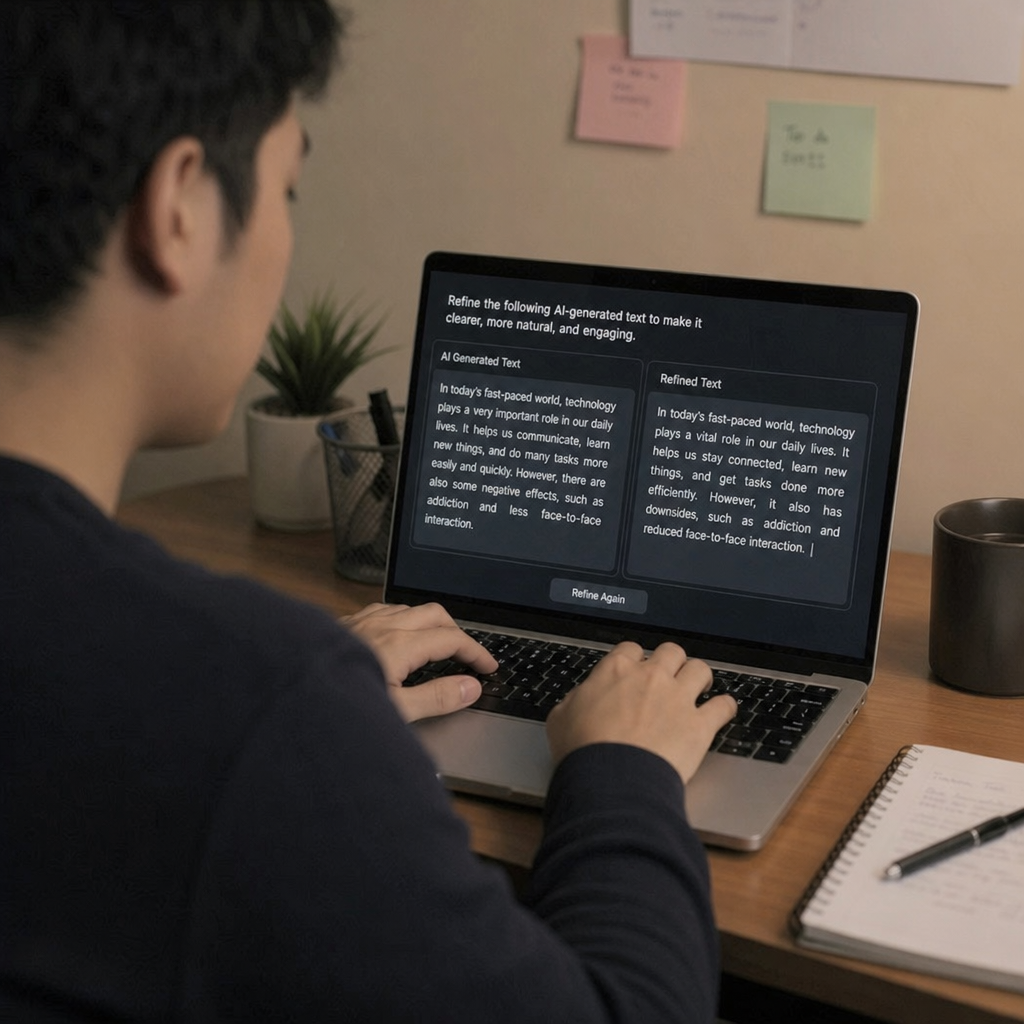
- Compare before and after versions. Keep the parts that improve flow and reject anything that changes the meaning.
- Add brand-specific details. Include examples, product context, audience language, or internal expertise.
- Do a final human edit. Check accuracy, remove fluff, and make sure the piece serves a real reader need.
This approach keeps the process efficient without handing over full control. The AI helps with momentum and polish, while the human editor protects quality.
Can an AI writing assistant still sound authentic?
Yes, an AI writing assistant can support authentic content when it is guided by real insight, specific inputs, and careful editing. Authenticity does not come from whether a sentence began with a person or a tool; it comes from whether the final content is honest, useful, accurate, and aligned with the audience. AI can assist with expression, but the perspective should still come from the brand, creator, or subject-matter expert behind the piece.
The best results usually happen when AI is treated like a collaborator, not an autopilot. For example, you might use an AI text generator to create a rough explanation of a topic, then revise it with customer questions, personal observations, or examples from your industry. After that, an AI humanizer can help smooth the language so the final piece feels consistent and easy to read.
Authenticity also depends on restraint. Not every sentence needs to sound clever. Not every paragraph needs a dramatic transition. Often, the most human writing is direct: it says something useful in language the reader would actually use.
Practical tips for stronger AI-assisted writing
AI tools can speed up content production, but better outcomes come from better habits. Before using Writesonic’s AI Humanizer or any content generation AI tool, decide what the piece needs to accomplish. Are you educating beginners, comparing options, explaining a process, or encouraging action? That decision should shape the structure and tone.
Use this checklist before publishing AI-assisted content:
- Clarify the audience. Define who the piece is for and what they already understand.
- Check the promise. Make sure the introduction tells readers what they will gain.
- Strengthen the structure. Use headings that reflect real decisions, questions, or learning points.
- Replace vague claims. Swap broad statements for specific explanations where possible.
- Keep useful examples. Add scenarios that show how the advice works in practice.
- Remove filler. Cut repeated ideas, unnecessary adjectives, and empty setup lines.
- Review tone. Make sure the voice feels natural for the brand and audience.
- Verify details. Check names, features, claims, statistics, and any time-sensitive information.
This checklist is simple, but it prevents many common issues. It also makes AI output more dependable because the final review focuses on reader value, not just grammar.
Balancing speed, quality, and originality
The appeal of AI content creation is obvious: faster drafts, more ideas, and fewer bottlenecks. But publishing more content is only valuable if that content helps someone. A short, clear article with useful insight is better than a long piece that says very little.
Writesonic’s AI Humanizer can support quality by improving readability, but originality still needs intention. Add your own point of view. Include details your audience will recognize. Explain why something matters, not just what it is. If the content could appear on any website in any industry, it probably needs more context.
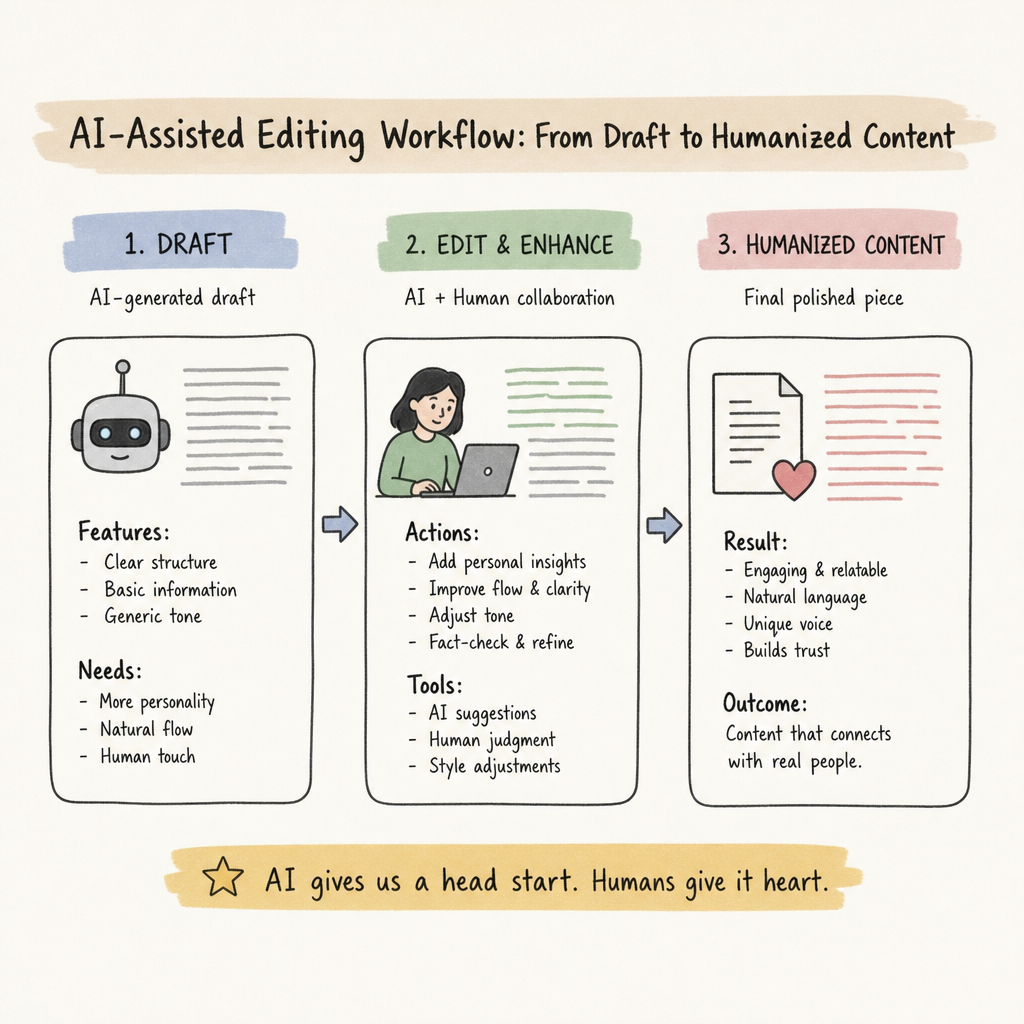
A healthy workflow might look like this:
- Use AI to brainstorm angles and outline the piece.
- Draft quickly with the help of an AI writing assistant.
- Humanize sections that feel stiff or repetitive.
- Edit for accuracy, usefulness, and brand voice.
- Publish only when the content has a clear reason to exist.
This balance lets teams move faster without lowering standards. The technology handles some of the production load, while people remain responsible for meaning, trust, and relevance.
Where an AI humanizer fits best
An AI humanizer is especially useful when the core message is already in place but the wording needs work. It can help polish educational blog posts, refresh old copy, adapt formal drafts into friendlier language, or make AI-generated sections feel less uniform. It is also helpful for non-native writers who want smoother English while keeping control of their ideas.
However, it is not a substitute for research, expertise, or strategic positioning. If the draft lacks substance, humanizing it will only make thin content sound smoother. The strongest results come from combining accurate information, clear structure, and natural language.
Think of Writesonic’s AI Humanizer as a refinement layer. It can improve how content feels, but the substance should still be built on audience understanding and editorial care.
Final takeaway
Writesonic’s AI Humanizer can be a valuable tool for making AI-assisted content sound more natural, readable, and engaging. Used alongside an AI text generator, an AI writing assistant, or a broader Writesonic AI workflow, it helps bridge the gap between fast drafting and reader-friendly publishing.
The best content still needs human direction. Bring the strategy, context, examples, and judgment; let AI help with speed and polish. When those roles are clear, AI becomes less of a shortcut and more of a practical partner in better content creation.